
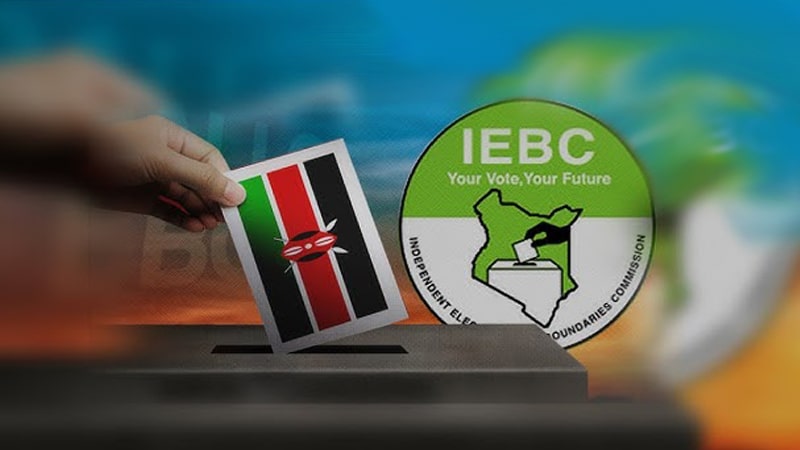
Constitutional Clarity on Presidential Election Dates: A Summary of Supreme Court Petition (Application) No. E020 of 2025
The Supreme Court of Kenya, in SC Petition (Application) No. E020 of 2025, was called upon to determine a very critical question of constitutional interpretation having to do with the timing of the next presidential election. The petitioners were Dr. Owiso Owiso, Khelef Khalifa, and Ashioya Biko, who identified themselves as interested Kenyan citizens and sought clarification on the interpretation of Article 136(2)(a) of the Constitution. Their application was necessitated by overall ambiguity regarding whether the fifth year of the ongoing term or after the term’s lapse was when the next presidential elections ought to be held.The applicants argued that failing to answer this ambiguity had the likelihood of subjecting the country to constitutional crisis and political instability.
The matter brought on board numerous stakeholders, including the Attorney General, the Independent Electoral and Boundaries Commission (IEBC), and several interested parties like the Law Society of Kenya, Katiba Institute, and the big political figures. In essence, the petition asked the Supreme Court to intervene on whether presidential elections must always take place on the second Tuesday of August every fifth year as stipulated in the Constitution, and if the Court had jurisdiction at the pre-election stage.
Issues Raised by the Petitioners
The petitioners raised several critical questions before the Supreme Court for adjudication. Central to their case was the presidential election timing as per Article 136(2)(a) of the Constitution. They argued that the Constitution firmly prescribes presidential elections to take place on the second Tuesday of August in every fifth year, i.e., the elections must be conducted in the fifth year of a presidential term and not after the term’s lapse. They asserted that any deviation from this constitutional provision would be an illegality and a violation of the fixed date of elections concept.
A second issue was the jurisdiction of the Supreme Court. Applicants maintained that by Article 163(3)(a), read in conjunction with Article 140 of the Constitution, the Supreme Court has original jurisdiction to hear matters in dispute arising in connection with presidential elections, including those arising before actually taking place. They thus contended that the Court was seized with the matter as a matter of right, since the date of the election bore a direct relationship to the conduct of a presidential election.
The petition also raised a procedural question regarding whether, and under what conditions, a party may apply for leave of the Supreme Court to file a petition that has already been filed. This unusual situation challenged the Court to construe whether the practice is authorized in the constitutional and statutory laws governing its operations.
In addition to the technical legal issues, the petitioners also emphasized the overall ramifications of electoral date uncertainty. They warned that it could lead to a constitutional crisis, political instability, and erode trust among people in Kenya’s democratic process. The problem was therefore not only legal but also a matter of public interest.
Equally close to this problem was the petitioners’ emphasis on the Kenyans’ constitutional right to free, regular, and fair elections. They argued that inconsistency or uncertainty in the election dates fixation undermines such a right and weakens the democratic order.
Finally, the petitioners highlighted the significance of the case, asking the Supreme Court to rule on the matter within two weeks. The petitioners asserted that urgent determination was necessary to safeguard the constitutional order, maintain political stability, and preserve public confidence in the elections.
To buttress their argument, they relied on:
In the Matter of the Principle of Gender Representation in the National Assembly and Senate (Advisory Opinion No. 2 of 2012) KESC 5 (KLR) – to argue that the jurisdiction of the Supreme Court includes constitutional issues with electoral implications.Speaker of the Senate & Another v Attorney-General & Another; Law Society of Kenya & 2 Others (Advisory Opinion Reference 2 of 2013) KESC 7 (KLR) – to demonstrate the Court’s restorative role in constitutional transitions and its mandate to advise where there is legal doubt.
Respondents’ and Interested Parties’ Arguments
- Attorney-General (1st Respondent)The Attorney-General opposed the petition, labeling it a pre-emptive incursion into IEBC’s mandate. He argued that the applicants were effectively seeking an advisory opinion without the requisite locus standi. He contended that the Supreme Court’s original jurisdiction under Article 163(3)(a), read in conjunction with Article 140, only becomes operative after declaration of the president-elect. The AG also lamented the mass joinder of interested parties without leave of court.Case Law: Macharia & Another v Kenya Commercial Bank Ltd & 2 Others, Application No. 2 of 2011; [2012] KESC 8 (KLR) – courts must act strictly within constitutional and statutory limits and cannot enlarge jurisdiction.
- Independent Electoral and Boundaries Commission (IEBC – 2nd Respondent)
IEBC raised a preliminary objection, requesting the Court to strike out the petition for lack of jurisdiction. It contended that constitutional interpretation matters are for the High Court (Article 165(2)(d)), and not the Supreme Court.Case Law: Owners of the Motor Vessel “Lillian S” v Caltex Oil (Kenya) Ltd [1989] KECA 48 (KLR) – where a court holds it lacks jurisdiction, it ought to “down its tools.” - Raila Odinga (4th Interested Party)
Raila opposed the petition as an abuse of process, arguing that no exceptional circumstances had been shown. He swore that the application was premature since the election date affects all elective offices and not just the presidency. He also argued that the issue was res judicata, having been decided by previous court decisions. - Jimi Richard Wanjigi (8th Interested Party)
In contrast, Wanjigi supported the applicants, pointing out that the issue was at the heart of constitutional democracy. Doubt over the date of the election undermines public trust, national unity, and economic stability, he maintained. - Other Interested Parties (LSK, Katiba Institute, Kalonzo Musyoka, David Maraga, Omtatah, Fred Matiang’i, KHRC)
None of them filed responses to the application.
Supreme Court’s Ruling
After reading the pleadings, submissions, and authorities that all parties have relied on, the Supreme Court addressed both the procedural and substantive matters raised.
- On the Procedure for Leave to Admit a PetitionThe Court held that the action of the applicants in filing a petition and an application for “leave to admit the petition” simultaneously was unprocedural and legally not sustainable. Where a petition is filed, it is appropriately before the Court, and no “leave” is required. The Court observed that the practice was alien to its rules and redundant.
- On Jurisdiction under Article 163(3)(a) and Article 140The Court once again stated that its exclusive original jurisdiction under Article 163(3)(a), read together with Article 140 of the Constitution, is strictly limited to disputes bordering on the validity of a presidential election after the declaration of results. It cannot be invoked to extend to pre-election disputes, e.g., announcing the date of a general election.The judges explained that the question of election dates falls within the jurisdiction of the High Court (Article 165(2)(d)), which is interpretation and application of the constitutional provisions rather than post-election validity.
- On the Risk of a Constitutional CrisisWhile acknowledging the applicants’ anxiety about uncertainty and potential instability, the Court stated that it was subject to constitutional and statutory limitations and could not expand its jurisdiction by “judicial innovation.” Any construction of the Constitution about election timing had to be resolved first by the High Court.
Final Orders
The Court accordingly made the following orders:
-
- The applicants’ Notice of Motion dated 23rd April 2025 and filed on 24th April 2025 was struck out for want of jurisdiction.
- Petition No. E020 of 2025 was not properly before the Court, since the Supreme Court did not have jurisdiction to hear it at this stage
- Each party was to bear its own costs.
Conclusion
The ruling in SC Petition (Application) No. E020 of 2025 brings out the strict jurisdictional boundaries of the Supreme Court in electoral matters. Despite the applicants having valid complaints about the absence of clear direction on election timelines, the Court was emphatic that a dispute of this nature had to originate in the High Court, not the Supreme Court. The decision upholds the principle that courts are not free to enlarge their jurisdiction under the Constitution, regardless of the degree of public interest in the matter.
This case thus brings to the forefront the tension between the citizens’ desire for constitutional certainty and the judiciary’s requirement to operate squarely within constitutional limits. It also reaffirms the High Court’s central role in constitutional interpretation, limiting the Supreme Court’s original jurisdiction to post-election presidential disputes under Article 140.